How to Study in Germany: One International Student's Journey from Russia to Berlin
- Last updated: 7/2/2026
- Topic: About Studying in Germany
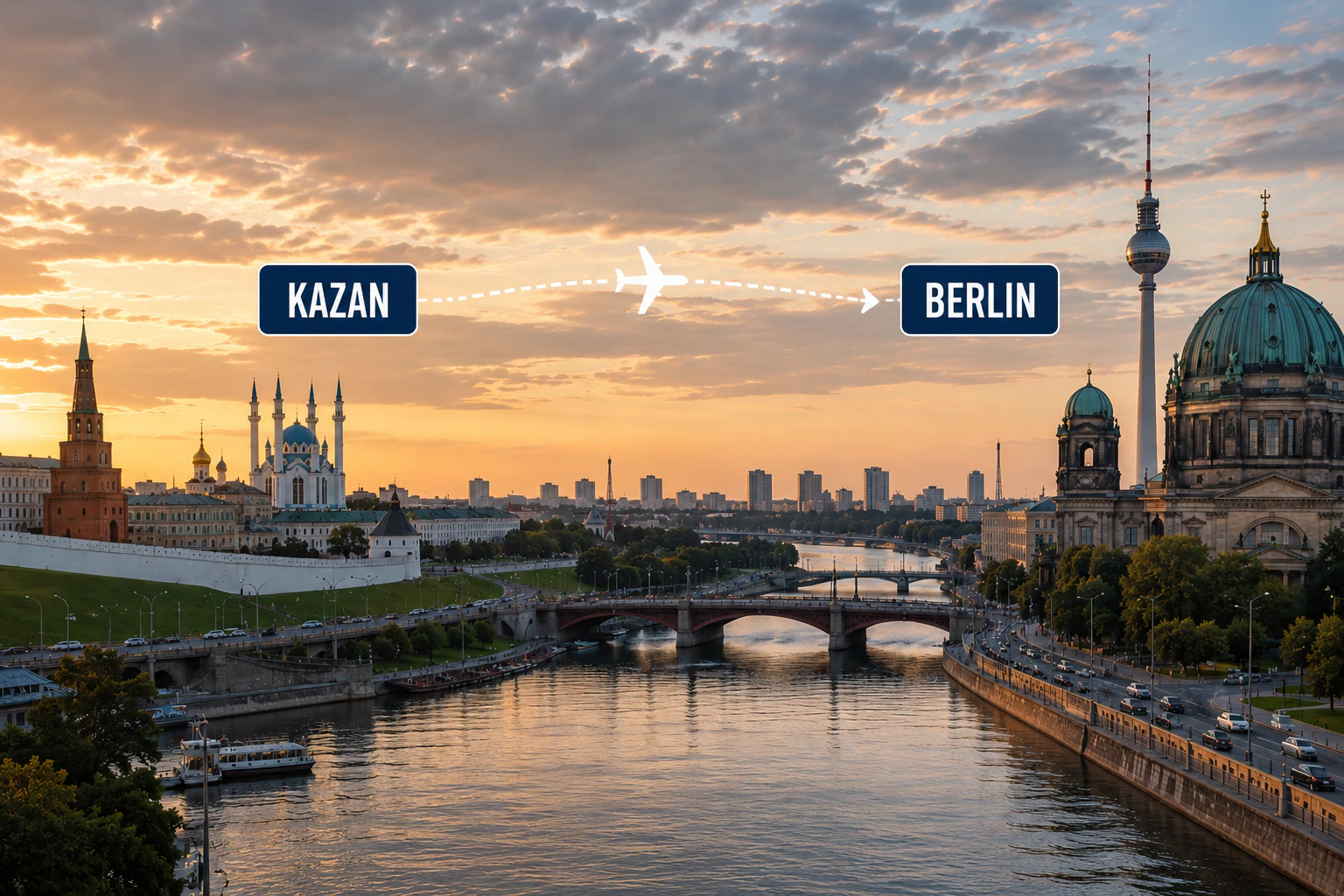
What does it actually take to move from Russia to Germany, navigate the university system, and build a career here? We sat down with Vlada, a study advisor here at Berlin International College (BIC), who did exactly that. Originally from Kazan, Russia, she now helps hundreds of international students follow a similar path, and she's sharing everything she wishes she'd known along the way.
Start your future in Germany today
Your future is in your hands. Apply to Berlin International College now and take the first step toward turning your academic dreams into reality.
The Decision to Study in Germany
- Why did you choose Germany for your higher education, and what made you commit to that decision?
My first degree is in Linguistics, I’m a translator of English and German. When I decided to continue my studies and apply for a master’s, Germany was at the very top of my list for clear reasons, but I honestly didn’t expect just how right that decision would turn out to be.
Before my master’s, I took part in the Erasmus exchange program and spent two semesters of my bachelor’s in a beautiful student town in Bavaria - Bamberg. That time was truly a turning point for me, it sparked my academic journey in Germany and made me fall in love with the environment, the culture, and the opportunities here.
- When you pictured your life in Germany before you arrived, what were you most excited about?
You’re probably expecting me to say that I came to Germany dreaming of trying every possible type of sausage and enjoying Oktoberfest beer …but I might have to disappoint you a bit.
What actually interested me most was something a little less touristy: I really wanted to experience the German education system from the inside. Even before I arrived, I knew it would be different from the Russian system, but I definitely didn’t expect the difference to be quite that big.
- What did you know about the German higher education system before you left Russia, and how different was the reality?
In Russia, each study program has a strictly fixed duration and I really mean strictly. Most bachelor’s programs last four years, and throughout all eight semesters students study only the subjects that have been predefined in advance by the Ministry of Education. There are elective courses, but the choice is quite limited. For example, in linguistics you can choose a second foreign language and as you can probably guess, I chose German.
I knew that things work differently in Germany, where students can choose not only many of their modules, but often also when to take them, within a recommended study plan. Of course, there are still module guides and structure, but overall there is much more flexibility.
Coming from a completely different educational system, this level of freedom sometimes felt like a challenge at first. However, over time I realized that it actually teaches students independence and planning skills, qualities that are essential for their future professional life.
Practical Steps: Visas, Language, and Arrival
- What was the student visa application process like? What documents did you need, and how long did it take?
Applying for a student visa to Germany is already quite a complex process, but doing it in the middle of the COVID pandemic in 2020 made it even more interesting.
I received my visa appointment about a month and a half before the start of my studies, and just two weeks later I was already on a flight from Moscow to Munich, on my way to start a completely new chapter of my life.
It’s hard to recall the exact list of documents now, but I do remember that there were quite a lot of them, and many required notarized translations, which also takes a considerable amount of time and planning.
- How strong did your German need to be before you arrived, and how did you actually improve it once you were living here?
My master’s program was fully taught in English, but my German was at B1 level when I started. I knew that if I wanted to feel truly comfortable here, I needed to improve it.
That’s why I intentionally took as many German courses at university as possible, and I also worked part-time in a café during my studies to practice the language in real-life situations. It really helped me become more confident and integrate better into everyday life in Germany.
- What was the first week in Germany like? What surprised you most about daily life as a new international student?
I don’t remember every detail of my very first week, but I do clearly remember how full it was of excitement and emotions …it truly felt like a long-held dream was finally becoming reality.
At the same time, there were also small cultural surprises that stayed with me. I remember being struck by the almost surprising number of pharmacies, churches, and bakeries everywhere. And of course, the fact that shops are closed on Sundays felt quite unusual at first. Today, however, none of this stands out anymore, it has simply become a natural and familiar part of everyday life here.
- What were the biggest bureaucratic hurdles, things like Anmeldung, opening a bank account, or getting health insurance, and how did you handle them?
Probably the biggest bureaucratic challenge for me was extending my residence permit. First, you have to wait for an appointment, sometimes for two to three months. Then you need to prepare a large folder of documents. In the end, there is also an in-person appointment, where you speak with the authorities and explain why you should be granted an extension.
Honestly, I think our students are very lucky in this regard, because we support them throughout this whole process.
- Was there an early moment, perhaps a small win, a kind stranger, or a class you loved, that made you think "I made the right decision coming here"?
Looking at my life today, I can confidently say that it reflects how right my decision was to move to Germany. What makes me especially happy is my work in the field of international education.
Challenges, Growth, and Breakthroughs
- Was there a moment you seriously considered giving up or going back? What happened, and what ultimately kept you going?
On my very first day in Germany, I actually seriously considered flying straight back home, because I lost my suitcase with all my belongings on the way from the airport.
But a phone call with my mom and a chocolate croissant helped me calm down, put things into perspective, and ultimately make the right decision to stay.
- How did the cultural differences between Russia and Germany shape you, both academically and as a person?
I moved when I had just turned 20. At that age, you are still very much in the process of forming your identity, shaping your moral compass, and building your personal values.
I used to think that the cultural differences between Germany and Russia made my personality and worldview quite unique. In a way, I see myself as a blend of both... the broad, open Russian spirit combined with German precision and a practical approach to life.
- What was the hardest part of learning to navigate the German academic system, and what do students consistently underestimate?
As an international student, the biggest challenge for me wasn't the academics but it was understanding how the German university system works. There are so many unwritten rules and strict deadlines. Now that I work in education in Germany, I see many international students underestimate the importance of planning ahead, asking questions early, and staying on top of administrative processes. Those skills often make just as much difference as academic ability.
- Did you experience homesickness or a language barrier that held you back, and what did overcoming it feel like?
Yes, I definitely experienced homesickness. After about three months in Germany, I really started to miss my family and friends. It wasn't easy at first, but I think once you understand why you came here and keep your long-term goals in mind, it becomes much easier to deal with. Over time, you build a new routine, make new connections, and Germany starts to feel more like home.
- Looking back, how did those challenging moments make you stronger, and would you change anything about the path you took?
Looking back, those challenges made me more independent, resilient, and confident. They taught me how to adapt to a new environment, solve problems on my own, and appreciate opportunities that I might have taken for granted before. I don't think I would change anything about the path I took because every challenge helped me grow and brought me to where I am today.
Not sure what to study?
Visit the following page to see a list of all of the study programs and universities available to you once you complete the BIC preperation program!
Accomplishments and the Path Forward
- Walk us through your academic journey in Germany. What did you study, at which institution, and what were you most proud of achieving?
I completed my Master's degree in General Linguistics at Otto Friedrich University Bamberg. It was an exciting part of my life that taught me a lot not just about languages, but also about patience, perseverance, and surviving endless reading and deadlines!
I'm most proud of finishing my Master's degree. There were plenty of challenging moments along the way, lots of deadlines, and more coffee than I probably should have had. But crossing the finish line and receiving my diploma felt amazing, and it made all the effort worthwhile.
- What was the single proudest moment of your entire student journey in Germany?
The proudest moment of my student journey in Germany was realizing that I had made it. Moving to a new country on my own, building a new life from scratch, and successfully completing my Master's degree was something I once only imagined. Standing there with my diploma in my hands, I felt proud not just because I had graduated, but because I had proved to myself that I could take on a big challenge, adapt to a new environment, and achieve my goal.
- How has living in Germany changed you as a person, and what aspects of German life and culture have you genuinely come to love?
Living in Germany has changed me in many ways. It made me more independent, adaptable, and confident. Moving to a new country on my own meant stepping out of my comfort zone every day, whether it was communicating in a different language, navigating a new education system, or building a life from scratch. Those experiences taught me to trust myself and embrace new challenges.
What I've come to love most about Germany is the balance between work and personal life, the beautiful nature, and the opportunity to travel so easily across Europe. I also appreciate how organized everything is and how much people value punctuality and respecting others' time. Over the years, Germany has become much more than just the place where I studied, it's a place where I grew as a person and created memories that I'll always cherish.
- How did your time as a student in Germany eventually lead you to your current role as a study advisor at BIC?
After finishing my Master’s degree, I realized I wanted to work in international education. As an international student myself, I went through all the ups and downs of studying abroad, so I know how confusing and overwhelming it can sometimes feel. At the same time, it was also an incredibly rewarding experience.
That’s what led me to BIC. Becoming a Study Advisor felt like a very natural step for me, because I really enjoy helping other students figure things out. It’s nice to be in a role where I can use my own experience to support others who are taking the same path I once did.
- What do you find most rewarding about advising international students today? Is there a student success story that has stuck with you?
I don’t really have just one story that stands out, because every student brings their own questions, doubts, and dreams when they come to our office. Each conversation is different, and that’s what makes the job meaningful.
For me, the most rewarding part is seeing the relief and happiness on their faces when things start to make sense for them.
Tips and Advice for Aspiring International Students
- In your view, what makes Germany such a special destination for international students and what does it offer that is genuinely hard to find elsewhere?
In my view, Germany is a very special destination for international students because it combines strong academic education with real opportunities for personal growth. Universities here encourage independent thinking and a practical approach to learning, which really helps students build useful skills for the future. Life in Germany is also very well-organized, which gives students stability and allows them to focus more on their studies. At the same time, it can feel like a big step at the beginning, especially for international students adapting to a new environment. But that challenge is also what makes the experience so rewarding in the end. Another great advantage is the location in the heart of Europe, which makes traveling and exploring other cultures very easy.
- If a student from Russia, or anywhere outside the EU, is reading this right now and thinking about studying in Germany, what is the single most important thing they should do first?
The most important first step is to start learning German as early as possible even if you plan to study in an English-taught program. Trust me, it makes a huge difference in everyday life. From ordering food to dealing with paperwork, suddenly everything becomes a lot less like a mystery game and more like actual life.
Even basic German will help you feel more at home, connect with people, and understand what’s going on around you (instead of just smiling and guessing). It also really helps with integration and makes daily life much smoother. And yes, it can open better opportunities for internships and jobs later on.
- What advice would you give about choosing between a Studienkolleg and other university preparation routes available to international students in Germany?
I think the Studienkolleg pathway is one of the most comfortable ways to start your educational journey in Germany. It gives you a smooth transition from school into the university system and helps you gradually adapt to the academic expectations here.
You also get time to improve your German, get used to the teaching style, and understand how things work in a new country without too much pressure at the beginning. For many international students, that extra year feels like a very helpful bridge rather than a setback.
Of course, there are other preparation routes depending on your background, but Studienkolleg is especially useful if you want a structured and supportive start. It helps you build a strong foundation before stepping into your degree program.
- Financially, what should students realistically prepare for?
Financially, students should be prepared for more than just tuition fees, because in Germany the main costs usually come from living expenses. On average, you should expect around 900–1,200 euros per month for rent, food, health insurance, transport, and other daily costs, depending on the city and lifestyle.
It’s also important to plan for the blocked account requirement if you are coming from outside the EU, as it is often needed for your student visa. At the beginning, there are also one-time costs like deposits for accommodation, residence registration, and setting up basic essentials for your new place.
Even though it can feel like a big amount at first, Germany offers a relatively stable and predictable cost of living compared to many other study destinations. With good planning, students can manage their budget well and focus on their studies without too much financial stress.
- What is the most encouraging thing you would say to a student who is excited about studying in Germany but feels nervous about taking the leap?
You should always follow your dreams, even if you feel nervous at the beginning. Feeling a bit afraid is completely normal, especially when you’re about to move to a new country and start a completely new chapter of your life.
In fact, if something scares you a little, it often means it’s exactly the right direction for you to grow. Studying in Germany can feel like a big step, but it’s also an opportunity to discover what you’re truly capable of.
So don’t let the fear stop you. Take the leap, trust yourself, and the rest will slowly fall into place.
- Finally, what does your life in Germany look like today, and does it match the dream you had when you first decided to make the move?
Today, I’m really happy with my life here in Germany. I work as an academic advisor at Berlin International College, which is a role I genuinely enjoy because I get to support students in an important stage of their life. Outside of work, I have built a nice circle of friends, I travel a lot and started exploring new hobbies, I recently began taking dance classes, which I really enjoy. When I first came to Germany as an international student, I honestly didn’t imagine I would settle in this well. Looking back, my experience here has turned out to be even more fulfilling than I had expected.
Feeling Inspired?
Meet Vlada personally! Book a consultation call with her and she will be happy to help you successfully follow in her footsteps.